 CrazyGaming
Why Competitive Games Are Just as Interesting to Watch as They Are to Play
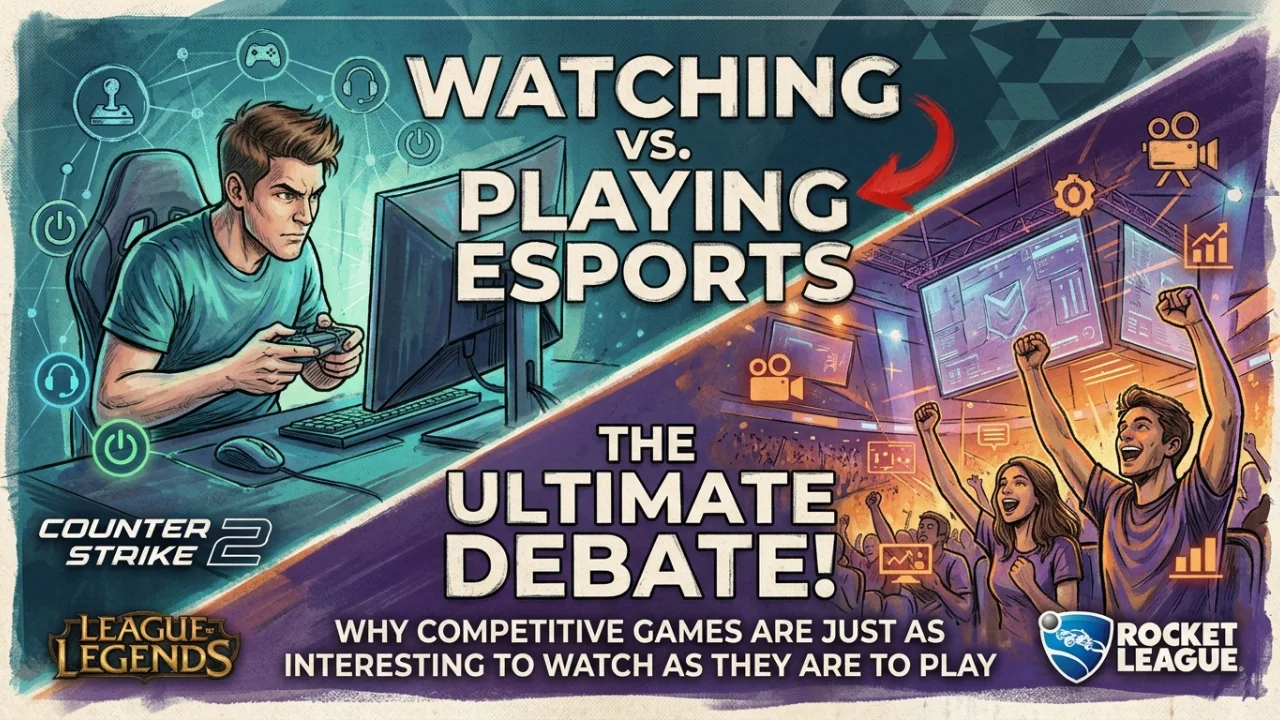
There is a particular kind of frustration that comes with watching someone else play a game you know well. You see the opening, you know what you would do, and for a few seconds you are almost reaching for a controller that is not there. Then the player does something you had not considered, the entire round shifts, and suddenly watching becomes interesting for exactly the same reason playing is: you have no idea what will happen next.
That is where competitive games really earn their appeal as something to watch, not just play. If you know the basics, you can usually follow what is happening, but there is still enough room for a player to pull off something clever, make a bad call or turn a round around in a few seconds. Someone can spend one night playing Counter-Strike 2, League of Legends or Rocket League themselves, then come back the next night and be just as happy watching better players take the same game somewhere they never would have thought to.
Knowing the game changes the way you watch it
A football match can be entertaining even if you have never kicked a ball seriously. Esports works in much the same way, although knowing the game adds another layer.
Someone who has played Counter-Strike understands immediately why losing one player early in a round matters. A League of Legends player notices when a team is giving up one objective because it wants another. In a fighting game, even the distance between two characters can tell an experienced viewer that somebody is trying to tempt an opponent into making a mistake.
The scoreboard only tells part of that story. Competitive gaming now sits inside a much larger world of statistics, tournament histories, team form and live match information, and fans who want more context often look beyond the broadcast itself. A useful source: strafe.com/esports-betting/ can add information around different competitive titles, live events and esports markets, while the match itself still comes down to the same thing it always has: what the players manage to do once the round begins. That uncertainty is a big part of the appeal.
The best players make familiar games look different
Most people who have spent enough time with a competitive game eventually reach the point where they think they understand it pretty well. Then they watch someone operating at the highest level.
A movement that feels difficult in an ordinary match suddenly looks routine. Decisions seem to happen before the spectator has even recognised that there was a decision to make. Sometimes a player takes a route or uses an ability in a way that makes thousands of viewers immediately wonder why they had never tried it themselves.
This is where watching becomes useful as well as entertaining. Competitive games have always had players learning from one another, but streaming and esports broadcasts made that process far easier. You no longer need to know the best player at the local arcade or happen to meet somebody better than you online. Tournament footage, Twitch streams and clips are available whenever you want them. And unlike a tutorial, a real match shows what happens when plans go wrong.
Good spectator design matters
Developers have had to think more seriously about spectators as esports has grown. Camera tools, replays, clear scoreboards and readable interfaces matter because viewers need to understand what is happening without being inside the game themselves.
This is particularly difficult in games where several things happen at once. A League of Legends match can have action taking place across different parts of the map. Tactical shooters may have ten players positioned in different locations before they suddenly meet within a few seconds. A good broadcast has to decide where to look without constantly making viewers feel that they missed the important moment.
Commentators help with that too. The best ones are not simply shouting when something exciting happens. They explain why a decision mattered, what a team might be preparing and what changed after a particular play. For newcomers, that can be the difference between seeing a collection of fast movements and actually following the match.
Streaming made the line between playing and watching thinner
Twitch and YouTube also changed what it means to watch games. Not every entertaining gaming stream is a tournament. Sometimes people watch ranked matches, practice sessions or a creator playing with friends because the personality around the game is as interesting as the result.
That creates a strange loop. Someone watches a player use a tactic, tries it later that evening, then returns to watch again with a better understanding of why it worked.
Competitive gaming lends itself to this better than most forms of entertainment because the spectator can go and attempt what they have just seen. You cannot watch a Formula 1 race and then casually try the same corner at 300 km/h. You can watch a clever play in an online game and attempt some version of it twenty minutes later. It may fail spectacularly, of course, and that is part of the attraction.
Sometimes watching is simply the better option
There are evenings when actually playing requires more concentration than somebody wants to give. Competitive games can demand quick reactions, communication and enough patience to deal with a bad match. Watching asks for much less while still providing the tension and unpredictability that make the game enjoyable.
That is why playing and watching have never really been rivals. One tends to make the other better. At some point the controller may be sitting untouched on the desk, but the game is still doing exactly what competitive games do best: making you think about what should happen next.